

I Come in Pieces
textile installation
December 2025, Ljubljana, Slovenia
exhibited in the Right Atrium of Magistrat Ljubljana, Slovenia
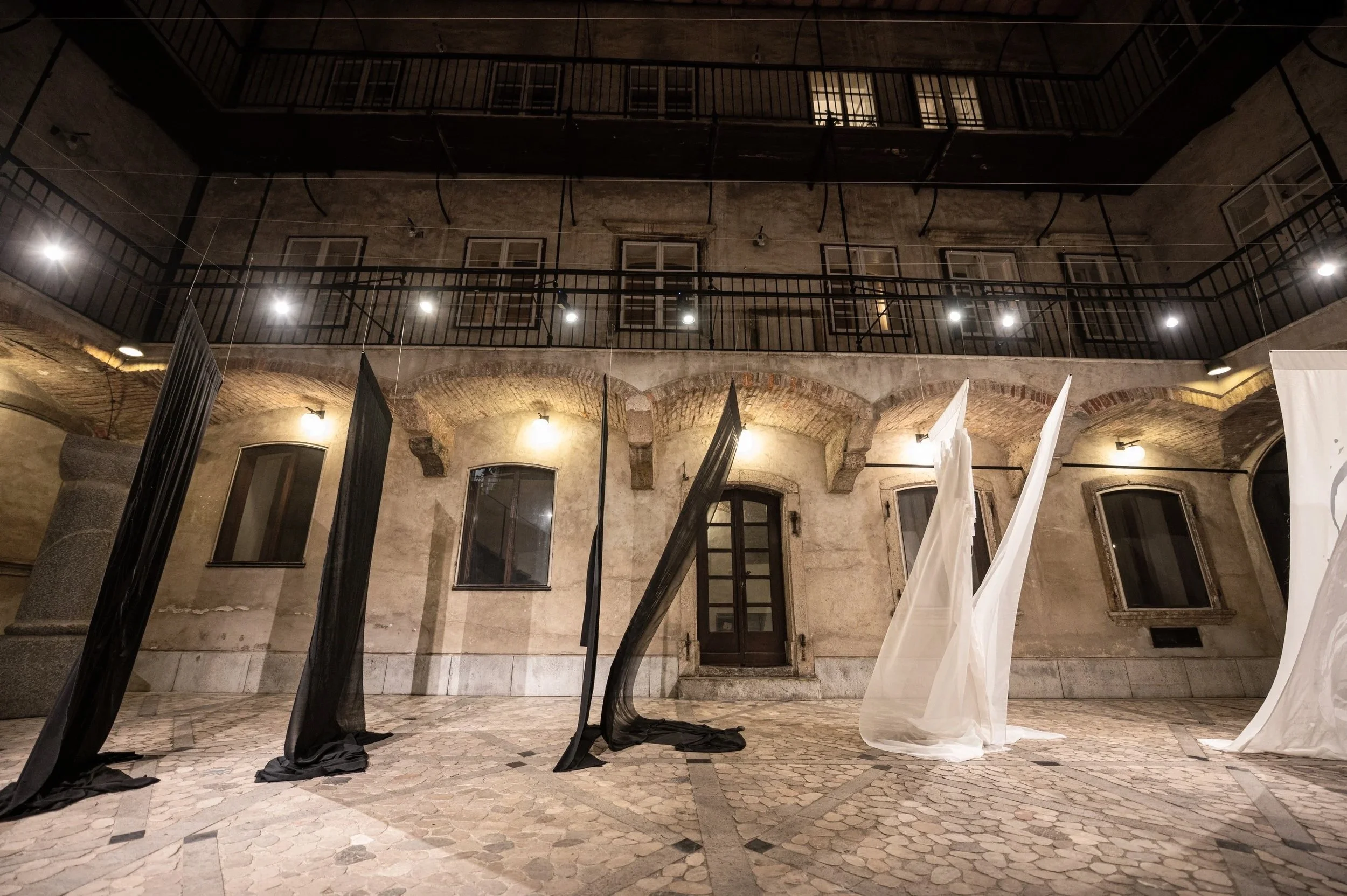
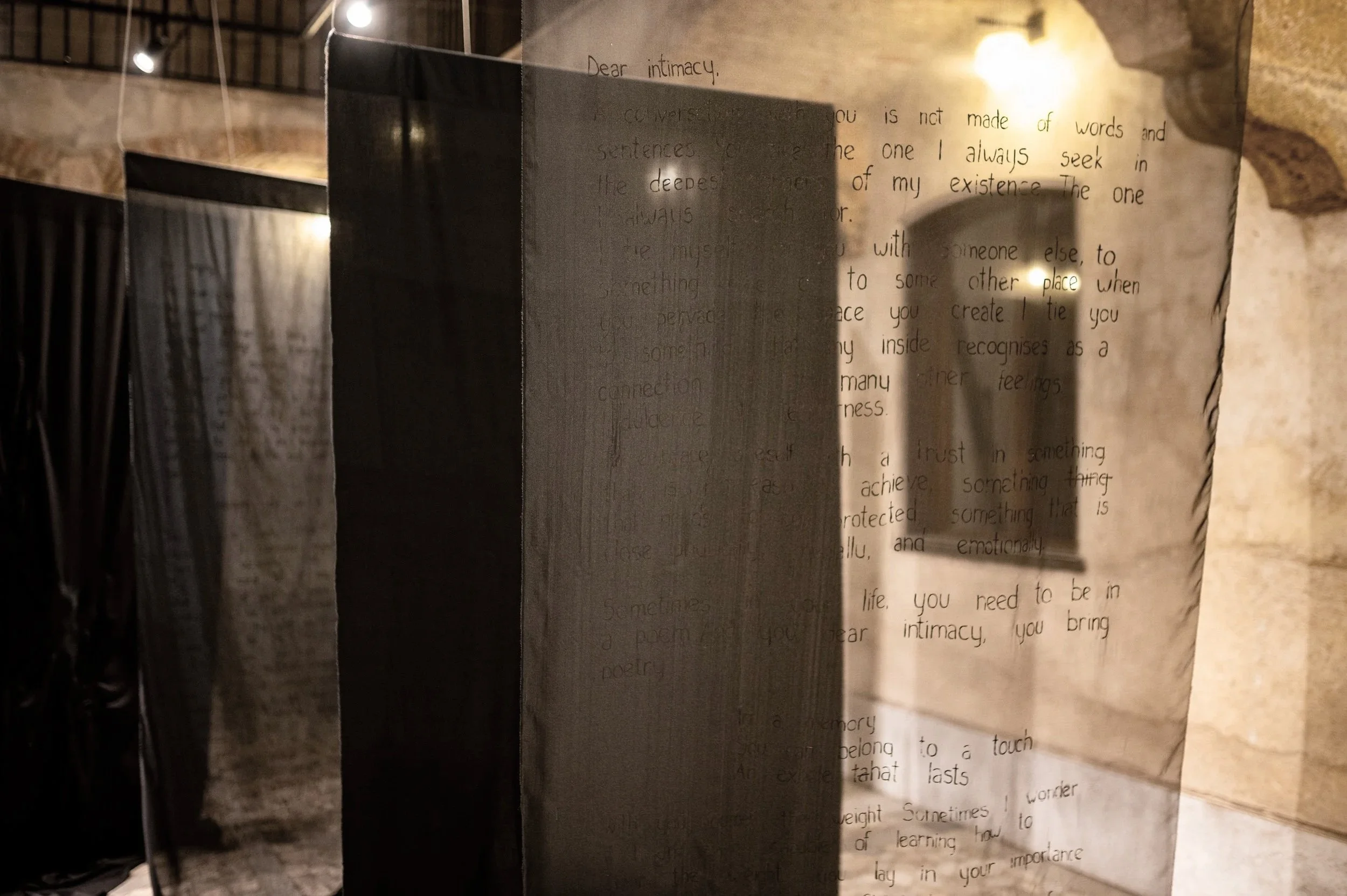
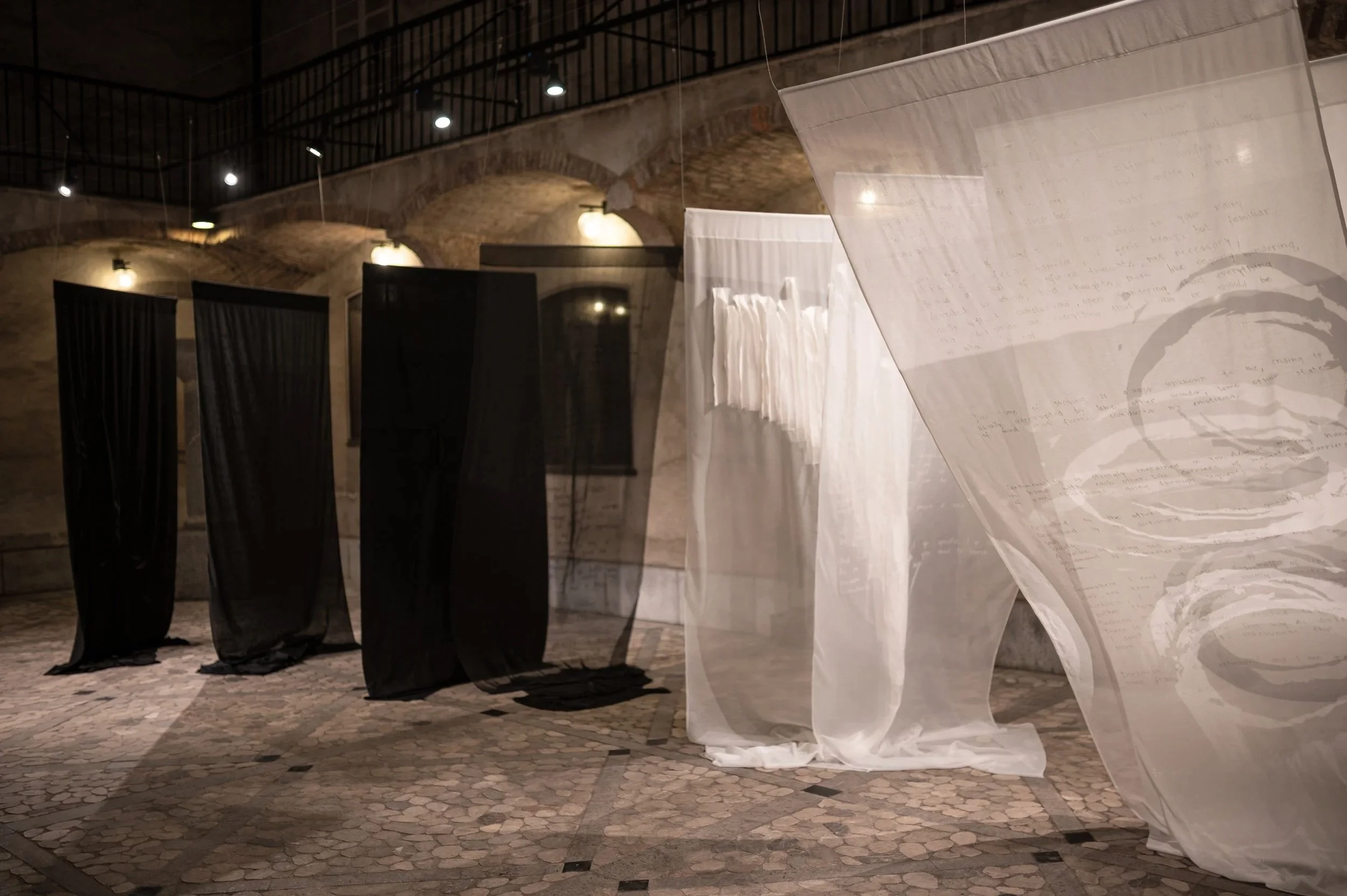
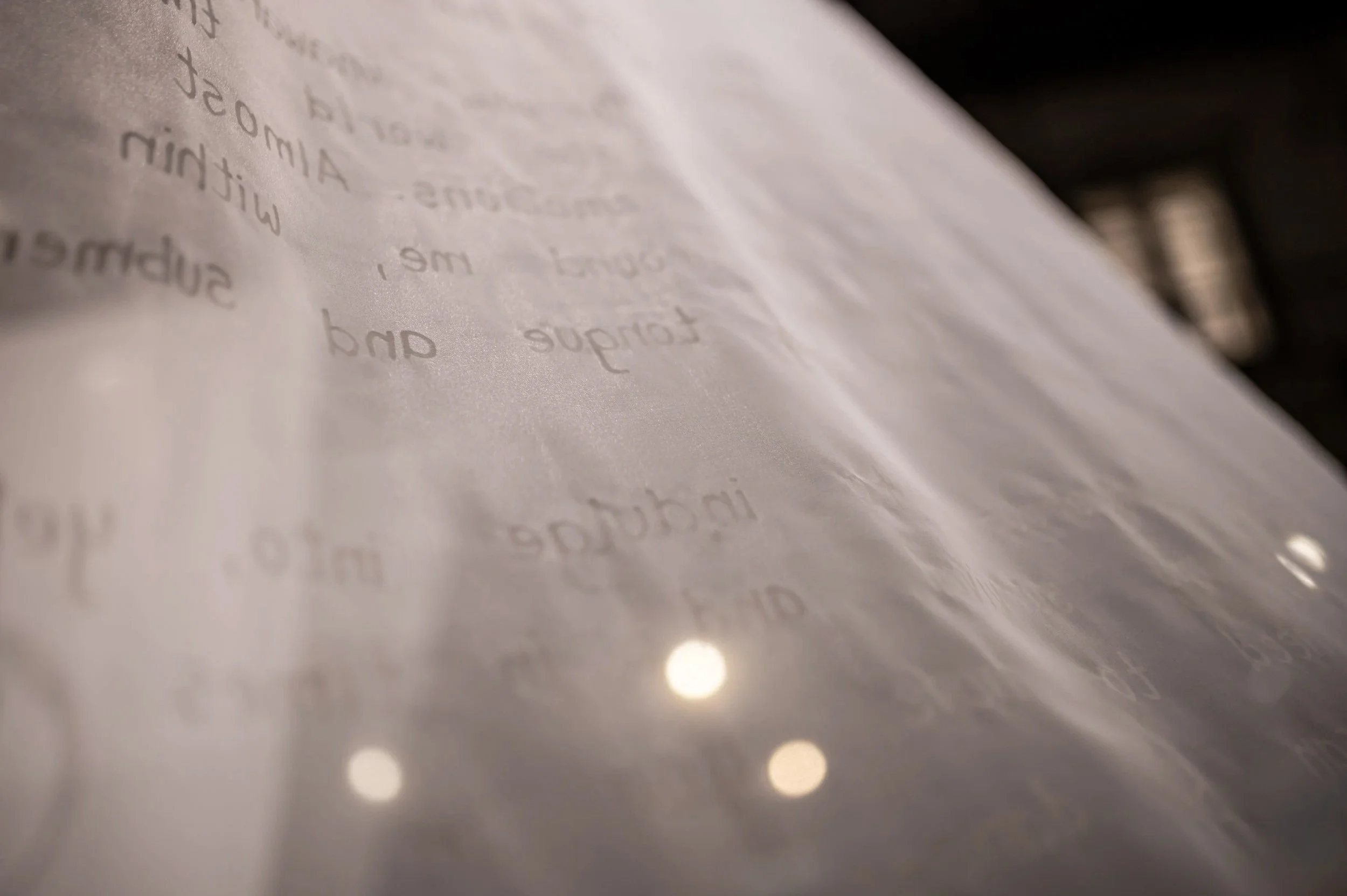
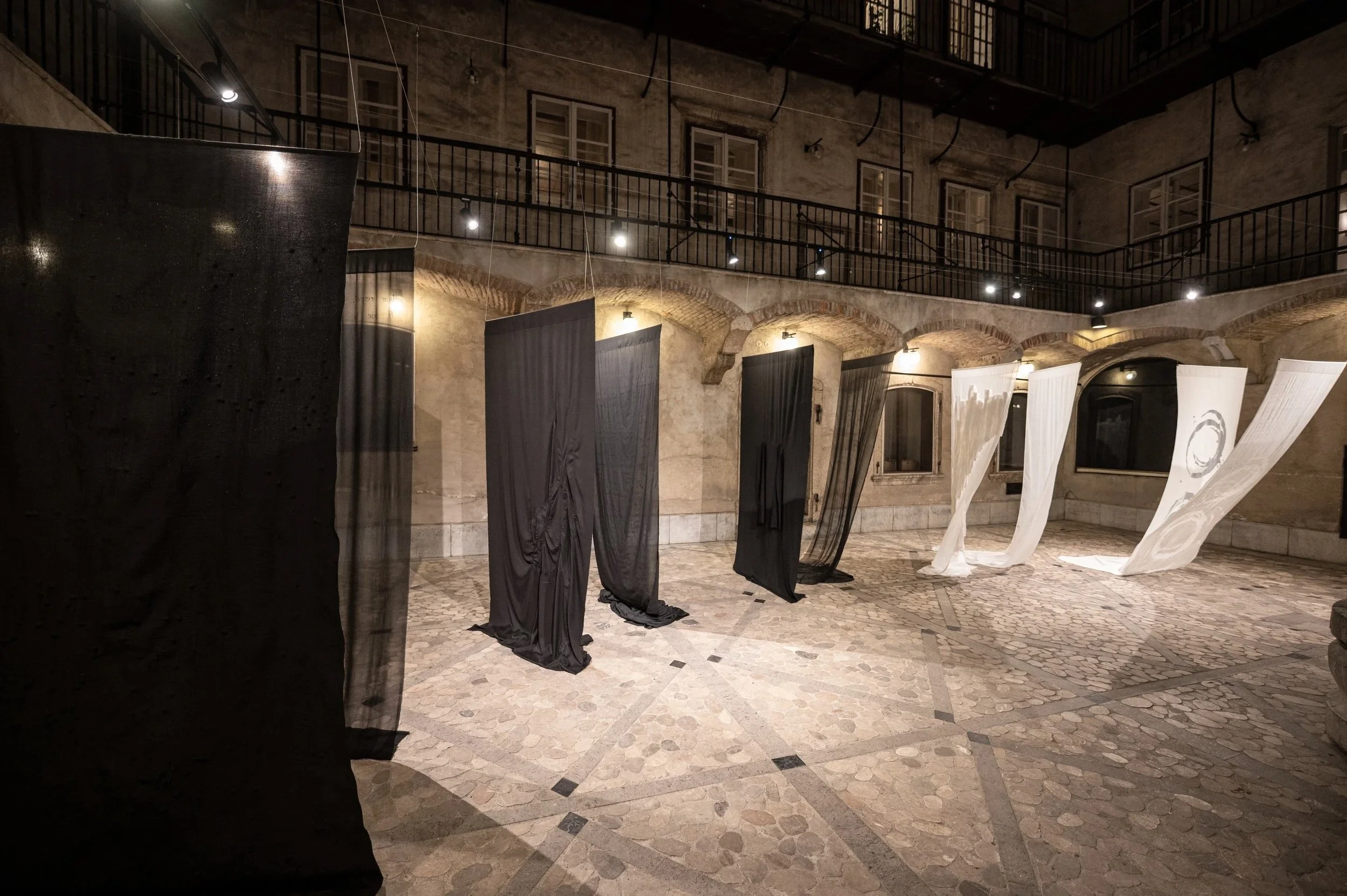
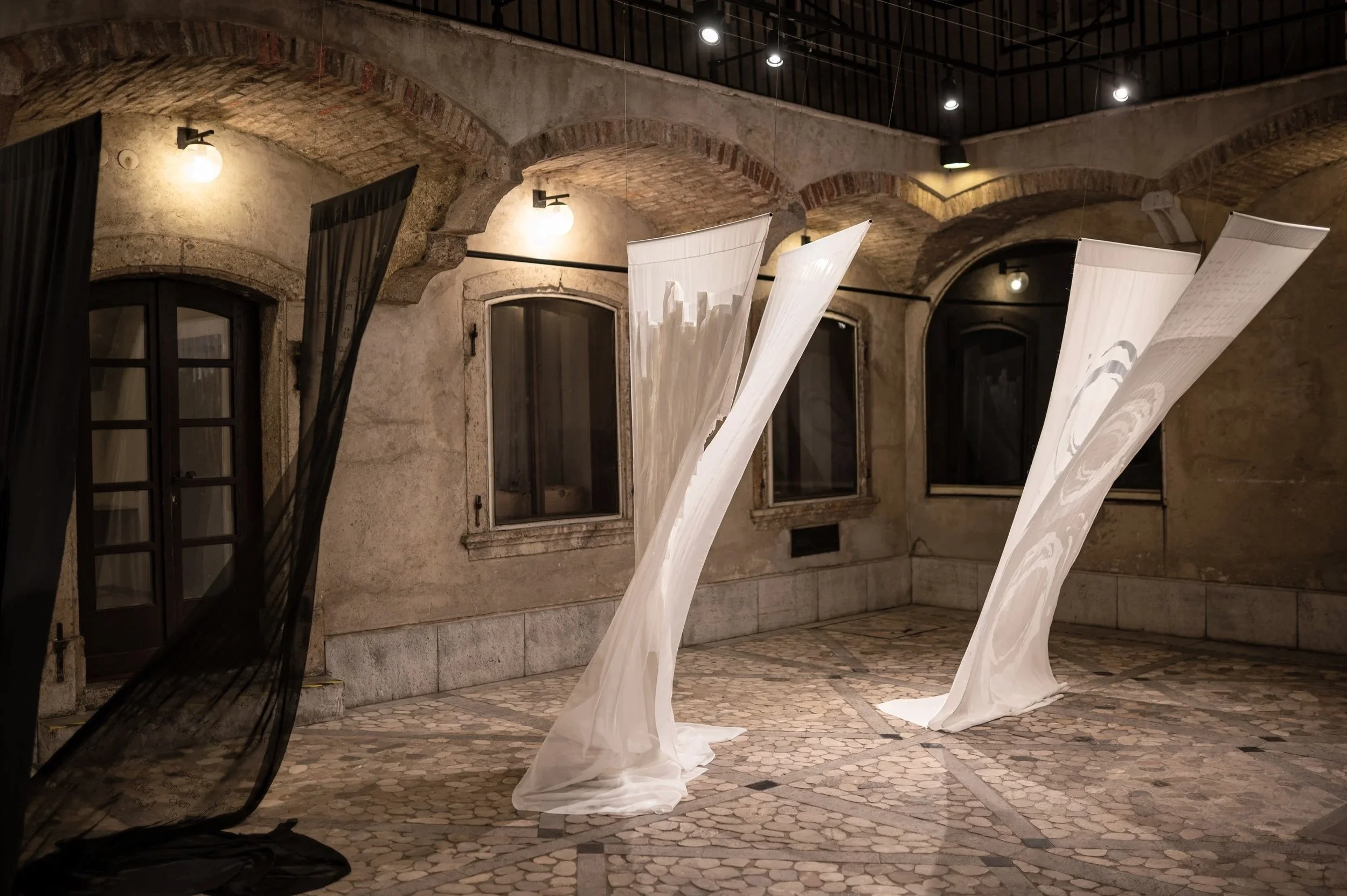
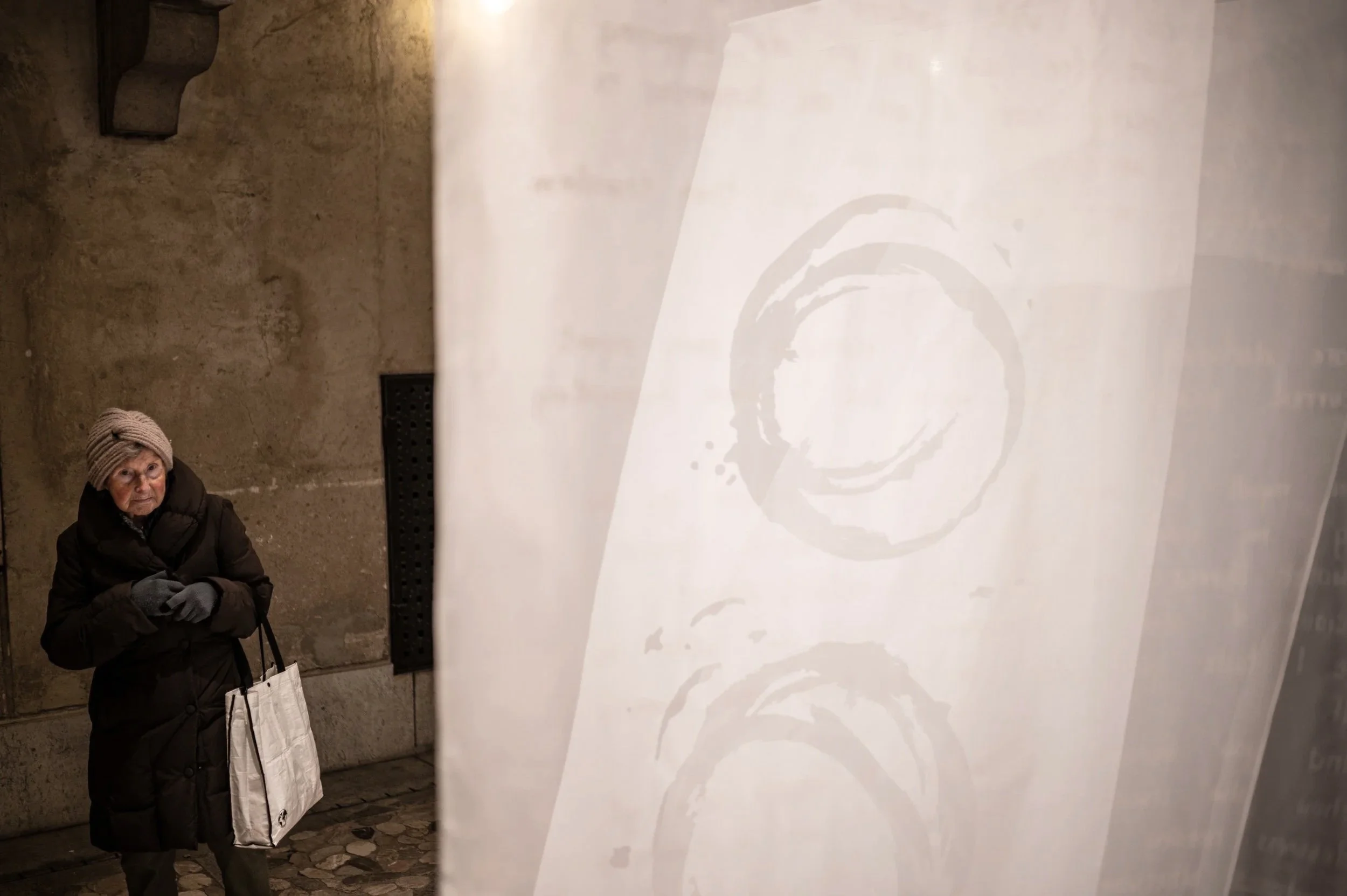
photo: Vid Brezočnik, arhiv MOL
Nika Batista’s I Come in Pieces explores the space of subjective experience—moments in which emotions seek form, expression, and a way to reveal themselves to the world beyond the body. In her work, textile is not merely a material to design, but a mediator: a sensory membrane between the body and the world, an organ of perception. Each thread serves as a conduit of emotional flow, each surface as a pulsating space in which sensations change, transition, and dissolve into the material.
The artist does not attempt to reconstruct the past: rather than memories, her emotions are events unfolding in real time. She records them by hand while they still last—before they take on meaning, before they become interpretation. These are not stagnant feelings; instead, they fluctuate, disappear, soak into the fabric. Between the written and the unspoken, a space opens up that is similar to prayer—a space where feelings have not yet become thoughts but already form a presence.
In this space, Batista introduces the structure of an open letter as an artistic expression—a thought becomes a manifesto addressed to an emotion, while the textile becomes its visual and tangible extension. Rather than merely a means of communication, the letter is a state, seeking not a reader, but a witness. The manipulated textile surfaces act as emotional membranes: porous, sensitive, changeable. Their duality shifts between word and visualisation, internal and external, presence and transience. Here, Batista transforms the diptych format into a living organism of dialogue. Writings and textiles thus meet on a surface where the sign becomes a thread, and the thread becomes meaning. The words worked into fabric exist in two states: legible and illegible. The former words communicate, while the latter remain silent, but both states create a space between meaning and the beauty of traces.
Traditionally intended for religious dialogue between the earthly and the divine, the diptych becomes a psychological moment—a two-part exchange between what can be said and what can only be felt. It is in this moment that Batista places her work. As an artist who uses textiles as a vehicle for emotions, in this work, she transcends the materiality of the thread, writing to the emotion and then materialising it. In her approach, feeling becomes material, and text becomes space. Through this elevation, fabric is transformed into a language of vulnerability and presence. In her works, fabric is not a space of return but of transition: emotion dwells in the material and only fleetingly brings it to life.
I Come in Pieces remains an open work—not in the sense of incompleteness, but of duration. Every glance changes its surface; every breath brings it back to the present. What remains is not an image, but a vibration—a word that has not yet vanished; material that remembers it was once a feeling; a touch that has not yet faded. It is a work in constant completion, a fragment that does not seek conclusion but pulsates between the material and the perceptible. There is no linear flow in it, no beginning and no end—only a continuous transfer between the artist, the material, and the observer.
In her work, the artist continues to explore the emotional and the ephemeral through textile diptych installations. Each pair addresses a specific emotion: sadness, intimacy, longing, obliviousness, regret. One textile panel features her open letter to the chosen emotion, while the other contains its visual interpretation. Together, they form a dialogue between thought and material, between perception and feeling, between word and thread, whereby reading becomes an act of feeling and understanding gives way to empathy.
Text by Lovro Ivancic.